Milk and Honey Day 16: Why Milk and Honey?
When the vision for this collection first came, it hadn’t expanded into Promised Land vibes with bees and honey yet.
It was the wheat field. Plain, simple and stretching as far as the eye could see, glowing gold in the setting sun.
At the time, I understood enough to know it mattered, but I don't think I fully understood what I was looking at. Like most meaningful visions, the understanding arrived in layers. The image came first. The interpretation has taken years to unpack, and the implementation longer still.
What kept drawing me back wasn't simply the beauty of the field. It was what the field represented.
A field of wheat is the opposite of survival.
No one plants acres of wheat because they're thinking about lunch.
A field represents planning, stewardship, patience, and faith. It represents believing in a future harvest long before there is any visible evidence one is coming. It requires someone to prepare the soil, plant the seed, tend it through the growing season, and trust that the work will eventually produce something worth gathering.
More importantly, a field produces more than a single meal.
It produces enough to feed a family, save seed for next year, share with others, and build something that extends beyond your own immediate needs.
Maybe that's why the vision felt so significant from the beginning.
When I looked at that wheat field, I wasn't thinking about a paycheck. I was thinking about inheritance. Not simply what we accumulate during our own lifetime, but what we leave behind. The opportunities we create. The stability we build. The ways our faithfulness today changes what becomes possible tomorrow.
For years, one phrase kept returning to me whenever I thought about that vision: my children and my children's children.
I don't think God was showing me a lottery ticket.
I think He was showing me stewardship.
The older I get, the more I realize that wealth is a much bigger idea than money. Money is part of it, certainly. There was a promise of provision in that vision that I don't want to pretend wasn't there. But when I look back now, I think the deeper promise was restoration.
The restoration of what was lost.
The restoration of hope.
The restoration of possibility.
The restoration of a future.
Not just for me, but for the people who come after me.
I think that's why the imagery of milk and honey eventually became so connected to the vision.
When I read about the Promised Land in Scripture, I don't picture luxury. I picture abundance in its healthiest form. It wasn’t the endless pursuit of more and the rat race we’re all in today.
I picture fertile soil. I picture security. I picture the relief of finally having room to breathe. I picture having what you need, seeing the people around you have what they need, and enjoying the goodness of it instead of constantly worrying that it might disappear tomorrow.
The Israelites still had work to do when they entered the Promised Land. There were crops to plant, vineyards to tend, homes to build, and families to raise. Milk and honey was never a promise that life would become excess. It was a promise that life could become full with abundance in exchange for effort.
That distinction matters to me.
I think a lot of people spend years living in what feels like wilderness seasons. Seasons where all of your energy goes toward making it through today. Seasons where you're focused on paying the bills, surviving the diagnosis, raising the children, healing from the loss, rebuilding after disappointment, or simply getting through the week.
We've all lived through seasons where tomorrow feels too far away to think about.
Milk and honey represents something different.
Not the absence of struggle, but the presence of hope. The belief that what you're building matters. The belief that faithful work eventually bears fruit. The belief that restoration is possible. The belief that God's promises are not merely ideas, but things that eventually take root in real lives.
Maybe that's why this collection has grown in me for so long.
Because underneath the wheat fields, bees, rivers, honey, and golden light is a question I've been wrestling with for years: what does abundance actually look like?
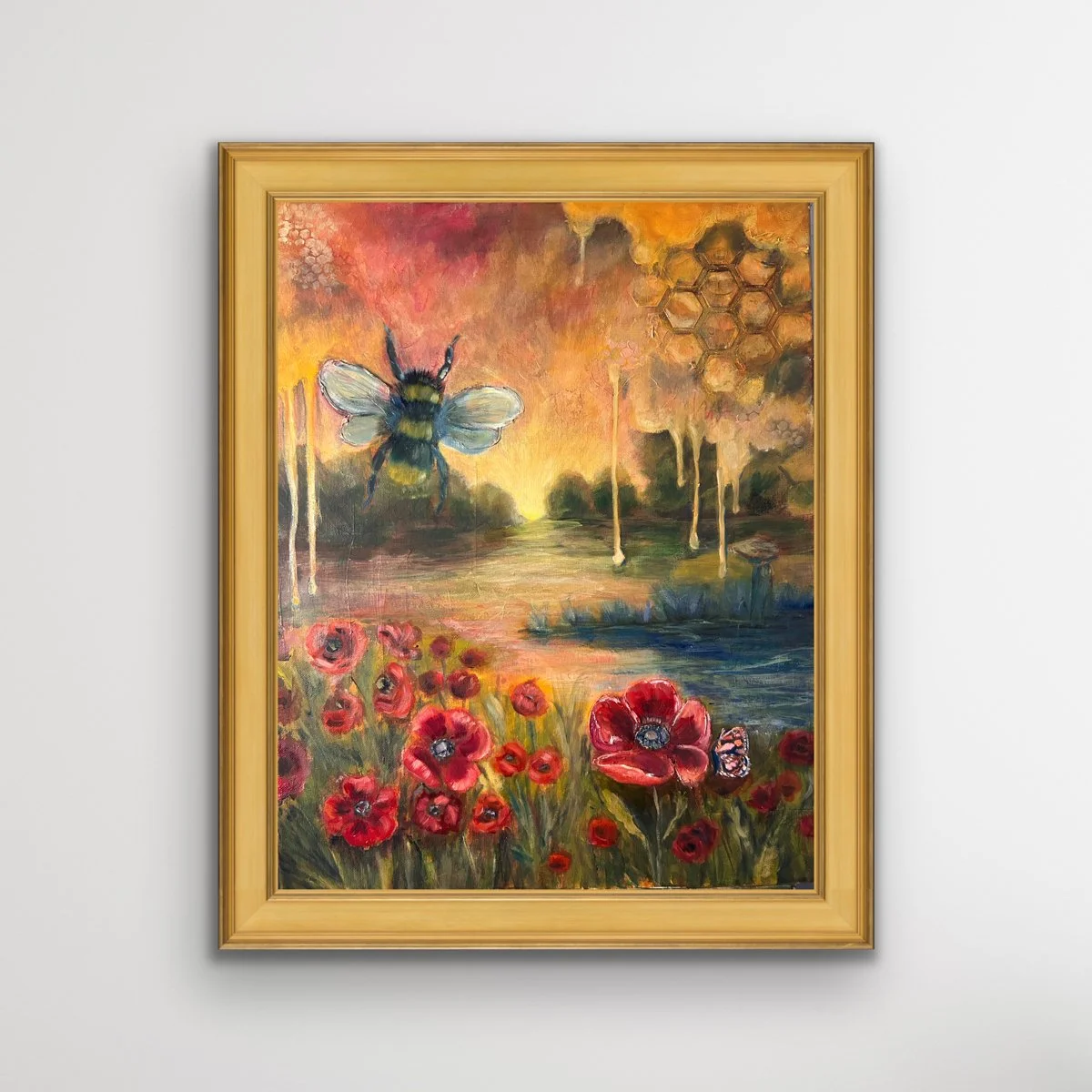
“What The Bee Remembers” by Bek Harris ©2026
The older I get, the less I think it's measured by money, status, or power and the more I think it's measured by generosity, gratitude, and the ability to think beyond immediate survival. It's measured by having enough that you can start living with open hands instead of clenched fists. It's measured by creating something that blesses people beyond yourself and leaves the world a little better than you found it.
Honestly, that's part of why I make art.
I want the work to matter.
I want it to bring beauty into people's homes. I want it to encourage hope during difficult seasons. I want it to become part of the stories people tell about their lives, their families, and the homes they are building. I want these paintings to be reminders that good things are still worth cultivating, even when the harvest isn't visible yet.
In that sense, every painting is a seed.
A small act of stewardship.
A belief that what we create today can continue bearing fruit long after we've finished making it.
When I think about milk and honey now, that's what I see. Not finish lines or rewards, but a life that has been cultivated well. A life marked by faithfulness, generosity, gratitude, and the courage to keep planting even when the outcome isn't guaranteed or carry an immediate payoff.
And if someone walks away from this collection carrying anything with them, I hope it's hope.
Not the fragile kind that depends on circumstances cooperating, but the deeper kind. The kind that believes God is good, that restoration is possible, and that what has been planted faithfully is still worth tending, even when the harvest hasn't arrived yet.
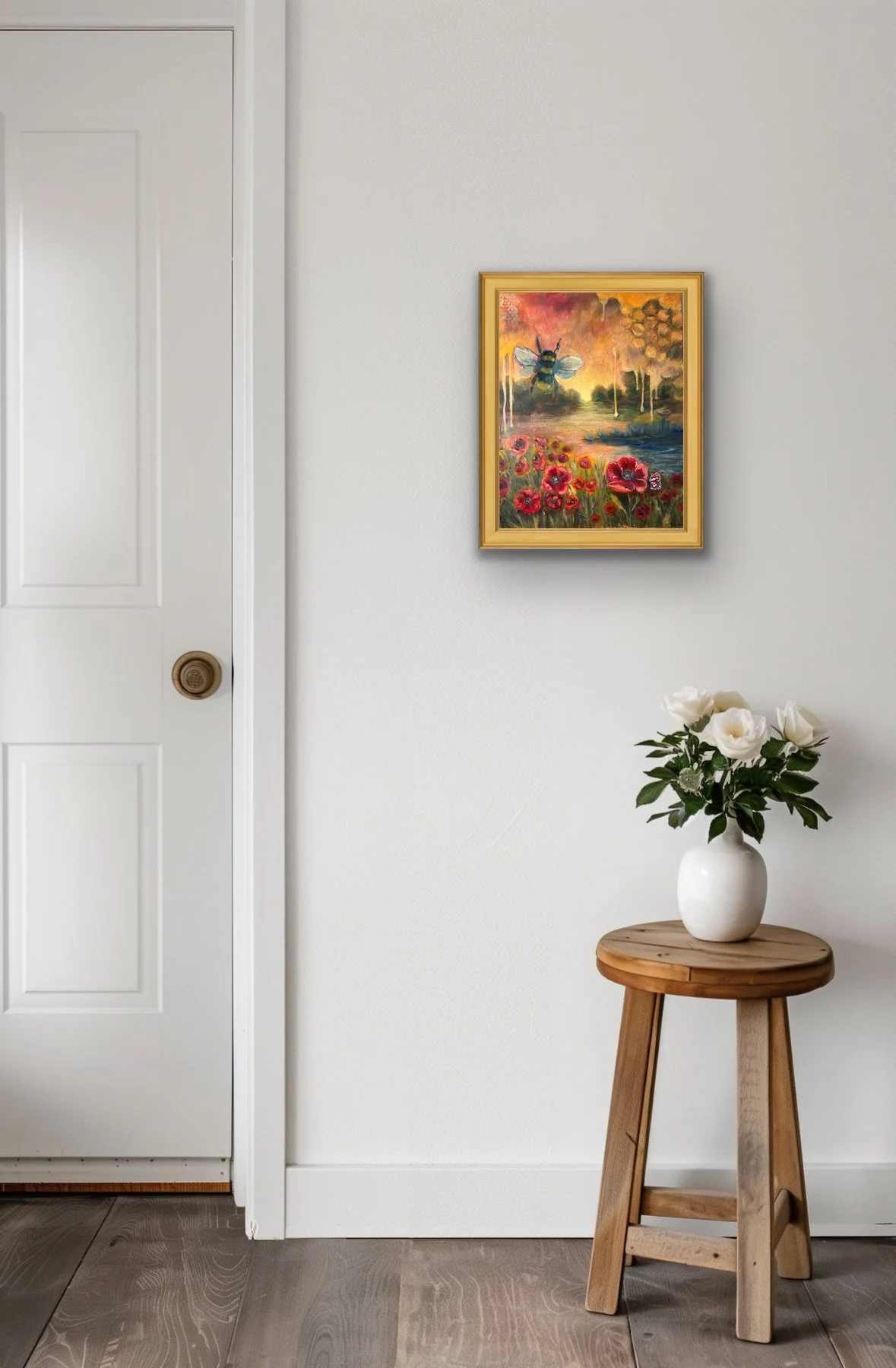
“What The Bee Remembers” framed on wall by Bek Harris. ©2026