
Milk and Honey Day 9: Chase the Light. Trust the Process.
Yesterday we talked about holding onto the vision when reality doesn't match it yet — about taking one step forward even when you can't see the whole road. What I didn't mention is that my painting process has been teaching me that lesson long before I thought to put it into words.
As an artist, one of the hardest things to learn is to paint what you actually see; not what you think is there. Your mind already knows that's a tree, a barn, a face. It wants to draw the symbol, outline the shape and draw the ‘object.’ Learning to override that and paint only what your eyes are actually receiving is much harder…
…because what the eyes receive is always, only, light.
So what we're really doing as painters is chasing light. How it falls. How it bends around a surface. How it creates the illusion of depth and form where there's nothing but pigment on a flat plane. We're not painting objects directly. We paint what the light is doing.
There is always a gap between what you see in your head and what exists on the canvas. That gap is where everything gets real.
The vision is complete somewhere in your mind. It has atmosphere, weight, a quality of light you can almost feel. But the canvas doesn't know any of that yet. It's blank. Waiting. Completely indifferent to what you're carrying.
The first job is simple: kill the white. You can’t paint light if its already white.
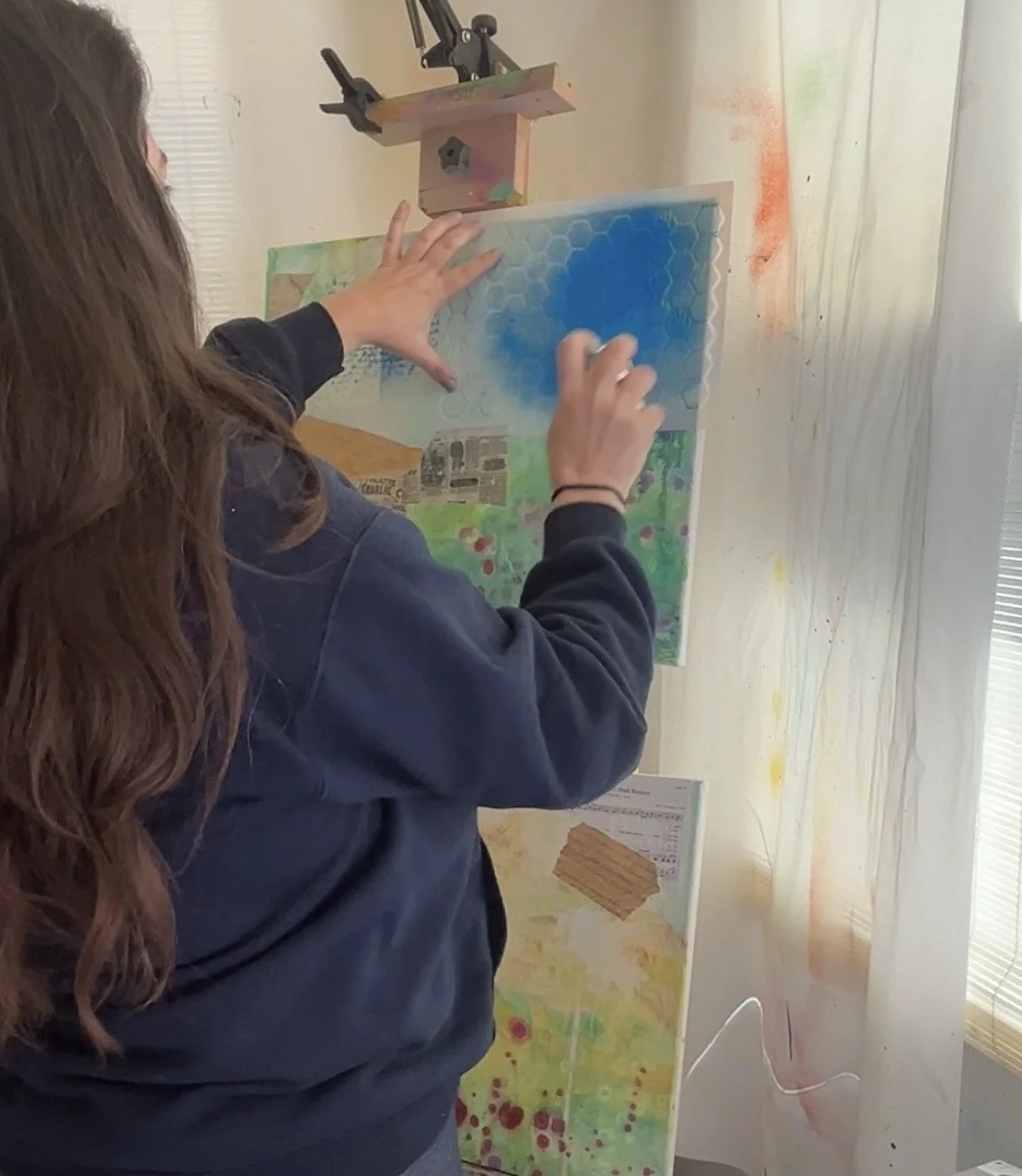
I use alcohol inks, spray paint, acrylic washes — anything that gets the surface moving fast and removes the hesitation that blank white space creates. This stage is called the underpainting, and it's less about what the painting will look like and more about creating something I can respond to. Texture mediums go down here too — modeling paste, heavy gel, glass bead, coarse sand… anything that builds depth and texture into the surface before a single intentional mark is made. At this stage I'm working light to dark, loose and instinctive, laying a foundation that will live underneath everything that comes after. Most of it will be covered. All of it matters.
Then the shift happens.
Once the underpainting is down and the surface has something to say, I start building the actual composition. And here's where the process flips. I switch from working light to dark, to working dark to light. I block in the large dark shapes first, establishing structure and weight. Then I start working toward the light.
This is the part that changes how people see painting once they understand it.
Most people assume you paint objects. A tree. A field. A horizon line. But that's not actually what the eye sees. What the eye sees is light — specifically, the way light falls across a surface and creates form. A tree isn't brown and green. It's a series of values, darks and lights, that your brain reads as a tree. So that's what I paint. Not the object. The light landing on it. The shadow it creates. The way the edges soften where the light fades and sharpen where it hits directly.
It sounds subtle. The difference in the finished work is not. When you paint objects, they end up cartoony and awkward.
This approach is what gives a painting its sense of atmosphere and presence — that quality where something feels lit from within rather than just colored in. It's also what makes abstraction work as emotional language rather than decoration. When you paint light instead of objects, the viewer's brain does the work of interpreting. They feel the landscape before they name it.
Most people are waiting to see the whole thing before they start. But you don't paint the field. You paint the light falling on it.
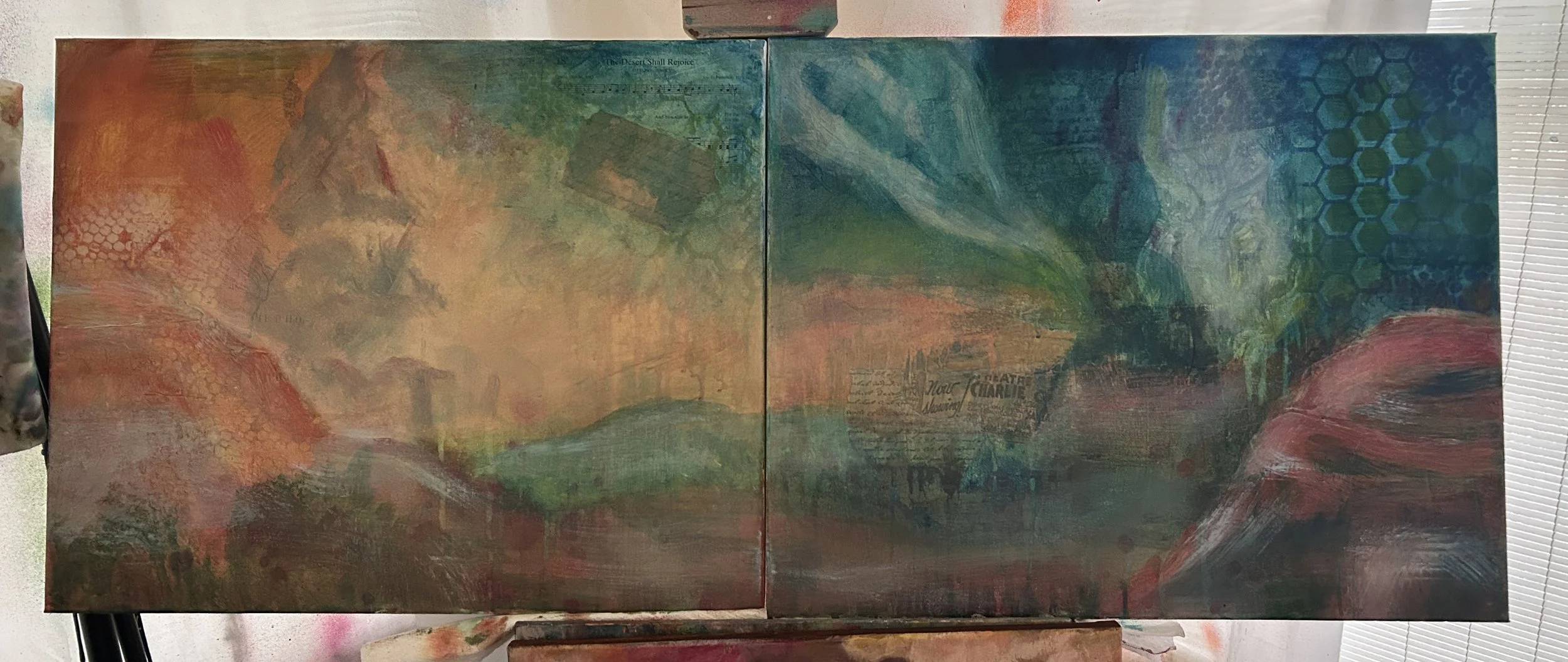
Right now both paintings are mid-process and still look more like questions than answers. The bones are there. The image is starting to emerge through the layers rather than just existing in my head.
That's exactly where it should be today, the images starting to become identifiable. Not finished, but in progress.
And it's exactly where I am too. I don't have the whole road laid out in front of me. I don't need to. I just follow the light, take it one stage at a time, and trust that the process will take me where I need to go.